Two coherent return positions exist, they trade different things, and the sport has never resolved which one is correct.
There is still no settled answer to where a returner should stand
ADVERTISEMENT
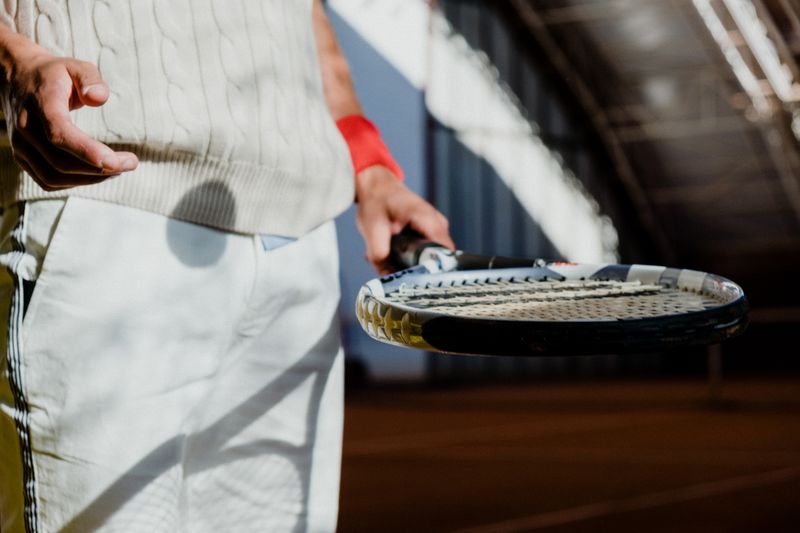
Most tactical arguments in tennis have quietly concluded. This one has not. Should the returner stand on the baseline and take the ball early, or drop back several metres and give themselves time.
The case for standing in is about time, but not the returner's time. It is about the server's. A return struck from on the baseline arrives at the server's feet earlier, catching them before they have recovered from the follow through and before they have set for the next ball. It also cuts the angle available to the serve, because the ball has had less distance to travel away from the centre. The cost is severe. Reaction time collapses, a big first serve becomes nearly unplayable, and the block return that results has very little on it.
The case for standing back is about the second serve as much as the first. Deep in the court, a returner has time to take a full swing, to run around a backhand, and to attack a kicker after it has come down from its peak rather than fighting it at head height. The cost is geometry. A wide serve pulls a deep returner further off court than it would pull a shallow one, and the return has to travel further, arriving late and giving the server a comfortable first ball.
Both are defensible. What decides it is the specific pairing, and this is why the best returners change position within a match rather than picking one and defending it philosophically. Against a huge flat server on a fast court, back. Against a heavy kicker on a slow court, forward, or you will spend the afternoon hitting shoulder height backhands from behind the fence. Split the difference between first and second serves, because those are two entirely different problems and standing in the same place for both is the one clearly wrong answer.
Yet plenty of professionals do exactly that, and I have never heard a convincing defence of it beyond rhythm and habit. Habit is a real consideration, and I would not dismiss it entirely, because a returner who is uncertain about where they are standing is worse than one who is confident in a slightly suboptimal spot.
Still. Two feet forward on the second serve is free, and the number of players who never take it is remarkable.
Related Articles